A Dental Timeline for Children, Birth to Sixteen
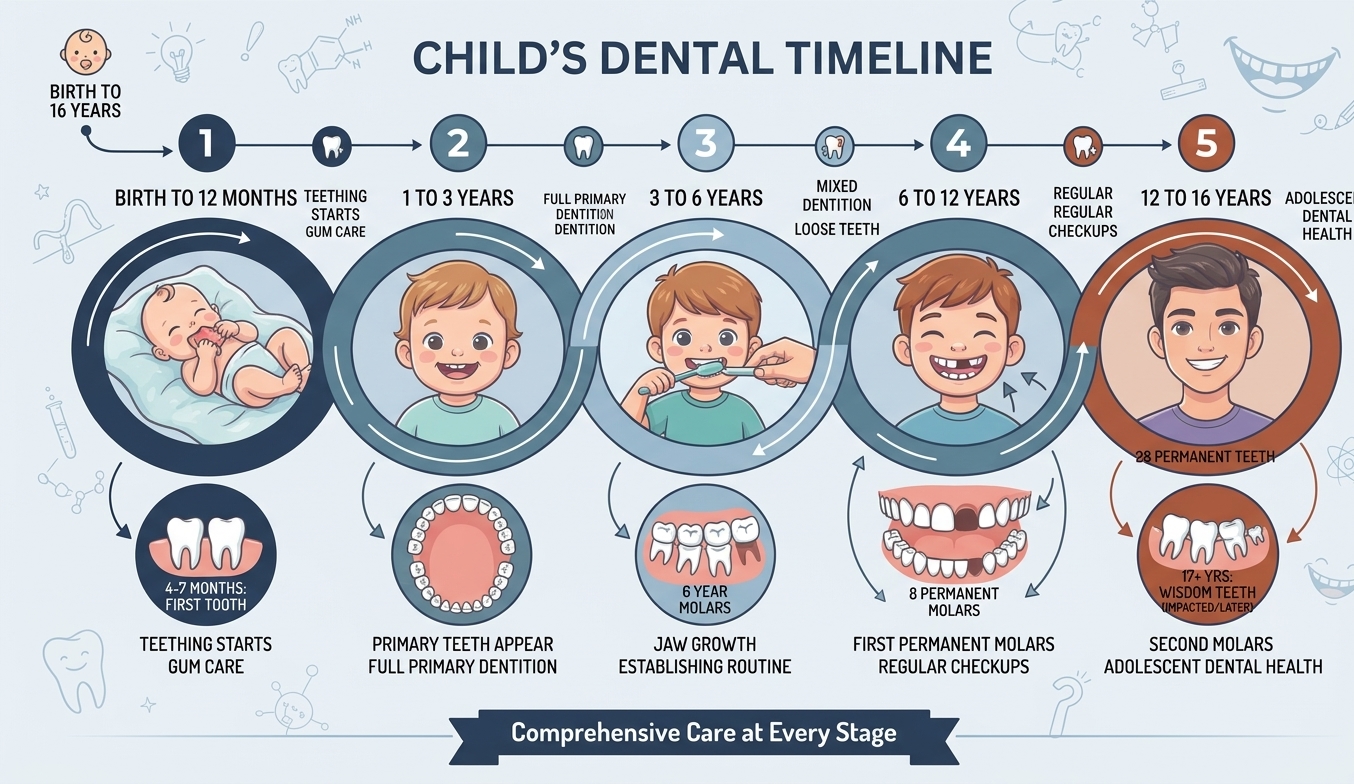
Almost everything that goes wrong with children's teeth goes wrong because something useful was done too late rather than not at all. Sealants after decay has started. A first visit at six instead of one. An orthodontic assessment at twelve when the useful window was seven. Here is the whole thing on one page, in order.

Birth to first tooth
Nothing to brush yet, but the habit is worth starting. Wipe the gums with a clean damp cloth after feeds. It does little clinically and a great deal for a child who then finds having their mouth touched entirely unremarkable.
Teething usually begins around six months, though anywhere from three to twelve is normal.
If feeding has been difficult from the start, particularly with latching, tongue tie is worth having looked at rather than persevering.
Six to twelve months: the first tooth, and the first visit
Start brushing the day the first tooth appears. A smear of fluoride toothpaste the size of a grain of rice, twice a day, on a small soft brush. You are doing the brushing, not them.
First dental visit by the first birthday, or within six months of that first tooth. It is short, there is no treatment, and it is largely a conversation with you about bottles, brushing and what comes next.
Stop bottles at bedtime. Milk pooling around the teeth overnight is the single most common cause of decay in very young children.
One to three years
Check-ups every six months. Fluoride varnish begins, applied a few times a year.
The full set of twenty baby teeth is usually complete by around two and a half to three.
Start cleaning between the teeth as soon as two of them touch, because that contact point is where a brush cannot reach.
Dummies and thumbs: neither is a problem at this age. Both become one if they continue past three or four, so the useful moment to think about stopping is now rather than later.
Three to six years
Toothpaste goes up to a pea-sized amount. You are still doing or closely supervising the brushing.
This is when the habits that cause decay establish themselves: juice in a water bottle, snacking across the afternoon, sweets as routine rather than occasional. Frequency matters more than quantity.
Dummy and thumb habits should have stopped by four, because from around then they start to affect how the front teeth and the palate develop.
Worth mentioning at a check-up if your child snores, sleeps with their mouth open, or is a persistently restless sleeper.
Six to seven: the two things that matter most
The first permanent molars arrive. Right at the back, with nothing falling out to make room, so most parents never notice them. These are the teeth that carry your child through the rest of their life, and they are the ones most likely to decay.
Seal them. Shortly after they erupt, before decay starts. Painless, no drilling, a few minutes per tooth, and one of the most effective preventive measures available. This is the single most time-sensitive item on this page.
Orthodontic assessment at around seven. Not treatment. Enough permanent teeth are through to see how the bite and jaws are developing, and a small number of problems, particularly crossbites and severe crowding, are far easier to address while growth is available. Most children need nothing at that stage, and being told so is a useful outcome.
The front baby teeth also start falling out around six. A mouthguard becomes worth having as soon as contact sport starts.
Seven to twelve
Brushing becomes independent somewhere around seven or eight, later than most parents expect, because manual dexterity arrives after willingness. Keep checking even after you stop doing it.
Baby teeth are replaced steadily through this period. Some things worth raising rather than waiting out: a baby tooth that has not fallen out while the adult tooth is coming through behind it, a permanent tooth that has not appeared long after its partner on the other side, or a tooth arriving discoloured or malformed.
Where interceptive orthodontic treatment is indicated, this is usually when it happens.
Twelve to sixteen
The second permanent molars arrive at around twelve and should be sealed like the first.
Most orthodontic treatment happens in this window, once the permanent teeth are through and while growth is still available.
This is also when oral hygiene reliably deteriorates. Energy drinks, autonomy over diet, and a teenager who no longer wants a parent asking about brushing. Decay rates rise in this age group for entirely predictable reasons, and the check-up interval matters more than it did at eight.
Wisdom teeth begin to show on radiographs from around sixteen, which is when their position is first assessed rather than treated.
Throughout, regardless of age
Check-ups every six months, more often where there is early decay, a high-sugar diet, enamel defects, or a child who needs several visits to stay comfortable.
Fluoride varnish at those visits. Water in the water bottle. Sugar at mealtimes rather than spread across the day. Brushing twice daily with the evening one the one that counts, spitting rather than rinsing.
If you have arrived at this page late
Most of what is above is a window rather than a deadline. A sealant placed at eight is still worth placing. A first visit at five is better than a first visit at seven. An orthodontic assessment at ten still tells you what you need to know, even if some options have narrowed.
The only thing that does not improve with waiting is decay.
Frequently asked questions
By their first birthday, or within six months of the first tooth appearing. The visit is short, involves no treatment, and is largely advice for parents.
Shortly after the first permanent molars erupt at around six, and again for the second molars at around twelve. The point is to seal them before decay starts, which makes the timing the important part.
Around seven, when enough permanent teeth are through to assess how the bite and jaws are developing. It is an assessment rather than treatment, and most children need nothing at that stage.
Around seven or eight, later than most parents expect, because the manual dexterity arrives after the willingness. Keep checking their brushing for a while after you stop doing it.
By around four. Neither is a problem in the first few years, but continuing past that starts to affect how the front teeth and the palate develop.
No. Almost everything on the timeline is a window rather than a deadline, and starting now is always better than waiting for a milestone.
Related pediatric dentistry guides
Considering pediatric dentistry at The Nook?
Message us and we'll answer your questions before you commit to anything.
Book your appointment
Talk to our specialists and get advice for your case.
Chat on WhatsApp 058 536 3650